
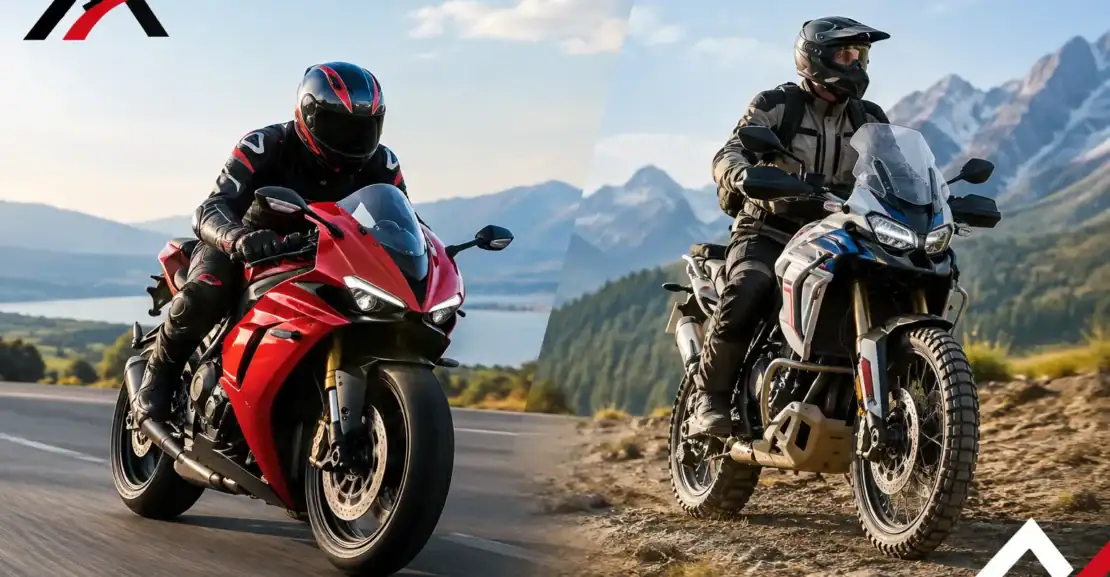
A motorcycle can look perfect under showroom lights and still be the wrong bike for the roads you actually ride. The sportbike vs adventure decision is less about which category is better and more about where you want the bike to take you on a regular Saturday – through fast, clean corners, across South Florida traffic, onto rough backroads, or out of town with luggage packed.
Both can deliver premium performance, serious technology, and a ride that feels special every time you start it. Their strengths simply show up in different places. The best choice is the one that fits your body, your routes, and the kind of ownership you will enjoy instead of merely admire.
Sportbike vs Adventure: The Core Difference
A sportbike is built around precision at speed. Its chassis geometry, suspension setup, tire choice, braking power, and forward riding position are all designed to make paved-road performance feel immediate. It rewards a rider who values corner entry, lean angle, acceleration, and a direct connection to the front tire.
An adventure motorcycle is designed for range and adaptability. Most offer upright ergonomics, longer-travel suspension, wider handlebars, useful wind protection, and the ability to handle imperfect pavement, gravel, and light off-road terrain. They are not all dirt bikes with headlights. Many modern adventure models are powerful, refined road motorcycles that happen to be much less bothered by a broken surface or a long day in the saddle.
That distinction matters because premium motorcycles ask for a real commitment. A bike that feels thrilling for 30 minutes but punishing after an hour may spend more time parked than ridden. On the other hand, buying an adventure bike for its practicality when you crave sharp pavement performance can leave you wishing for more urgency every time the road opens up.
Choose a Sportbike for Pavement Precision
A sportbike makes sense when riding itself is the destination. If you plan your weekends around favorite curves, track days, early-morning runs, or clean stretches of highway, the category delivers a focused experience that is hard to duplicate.
The riding position puts more weight over the front end, which helps the rider feel what the tire is doing. Clip-on bars, rear-set foot controls, and a narrow profile support aggressive body positioning. Add sticky tires, powerful brakes, and sophisticated rider aids, and a modern premium sportbike can feel remarkably composed when ridden with skill and restraint.
The trade-off is comfort. Wrist pressure, bent knees, heat management, limited wind protection at lower speeds, and a firm seat can become more noticeable in city traffic. Miami-area roads also bring congestion, uneven pavement, rain, and sudden construction zones – conditions where a sportbike’s low stance and short-travel suspension ask more from the rider.
That does not mean sportbikes are impractical. Many riders use them for regular weekend rides and occasional commuting without issue. The question is whether the focused ergonomics feel exciting to you after a full hour, not whether you can tolerate them once.
Sportbike ownership is a strong fit if you:
You prioritize paved-road handling, want a more aggressive visual presence, enjoy performance upgrades, or expect to ride at track events. It is also a natural choice for riders who already have another vehicle for long-distance travel, errands, or passenger duty.
Choose an Adventure Bike for More Kinds of Riding
Adventure motorcycles appeal to riders who do not want the route to end when the pavement gets questionable. Their upright position gives you a wide field of view in traffic and a more neutral posture over longer distances. Taller suspension can soften rough pavement, and a larger fuel tank often supports more ambitious day trips.
For Florida riders, an adventure bike can be particularly useful even if true off-road riding is not on the calendar every week. Road surfaces vary. Heavy rain can leave standing water. A higher seating position and longer suspension travel can make daily conditions feel less restrictive. If you regularly carry a passenger, luggage, riding gear, or a weekend bag, the practical advantage becomes even clearer.
Adventure models are also easier to equip for travel. Factory or aftermarket luggage, crash protection, auxiliary lighting, larger windscreens, and navigation mounts are common additions. That flexibility can make one motorcycle capable of commuting on Friday, taking a two-up ride on Sunday, and leaving for a multi-state trip later in the year.
The compromise is that adventure bikes are typically taller, wider, and heavier than sportbikes. A tall seat height can be intimidating at stops, especially for shorter riders or newer premium-bike buyers. Their larger front wheels and long-travel suspension can also feel less razor-sharp in fast pavement transitions than a dedicated sportbike.
Adventure ownership is a strong fit if you:
You value comfort, visibility, long-distance ability, passenger flexibility, and the option to explore beyond pristine pavement. It is often the better one-bike solution for riders who want one machine to cover a broad range of real-life use.
Performance Means Different Things on Each Bike
Do not assume an adventure bike is slow or that a sportbike is automatically the more exciting machine. Premium adventure motorcycles can produce serious horsepower and torque, with electronics that manage traction, braking, throttle response, and suspension across changing surfaces. Their acceleration can be startlingly strong, especially in real-world roll-ons.
A sportbike usually feels more intense because of its lower stance, high-revving engine character, and sharper steering response. It communicates speed more directly. On a smooth road with an experienced rider, it is generally the more precise tool.
An adventure bike tends to make speed feel more manageable. Its leverage from wide handlebars and its upright posture can inspire confidence on unfamiliar roads. For some riders, that confidence leads to more miles, more practice, and ultimately more enjoyment than a machine that feels demanding every time it leaves the garage.
Comfort, Fit, and the Test Ride Matter Most
Specifications are useful, but they cannot tell you whether your knees feel cramped, whether you can confidently manage the bike at a stop, or whether the windshield creates helmet buffeting at highway speed. Those answers come from sitting on the motorcycle and, ideally, riding it.
Pay attention to three moments: pulling away from a stop, cruising at the speeds you normally ride, and making a tight turn in a parking lot. A sportbike may feel light and natural once moving but require more effort at low speed. An adventure bike may feel tall initially but become exceptionally easy to control once its suspension settles and its wide bars are working for you.
For a used premium motorcycle, condition matters as much as category. Check maintenance history, tires, chain and sprockets, brake wear, suspension condition, electronics, and any installed modifications. A properly maintained, professionally inspected motorcycle creates a very different ownership experience than a bargain purchase with deferred service waiting in the background.
Budget Beyond the Purchase Price
The right budget includes more than the monthly payment. Sportbike tires can wear quickly, particularly on high-performance models ridden aggressively. Insurance may also be higher depending on the model, rider profile, and coverage. Fairings are expensive to repair after even a low-speed drop.
Adventure bikes may need more accessories to become the travel machine you picture: luggage, protection, a taller screen, or upgraded seats. Their tires can be costly as well, especially if you choose a more off-road-oriented pattern. Taller, heavier machines may also make a tip-over more likely while learning to manage uneven ground.
Neither category is inherently inexpensive to own at the premium level. The smarter approach is to choose the bike that eliminates the need for a second motorcycle. If an adventure bike handles your commute, trips, and weekend rides, its versatility may justify the investment. If your real goal is pavement performance, a sportbike may provide more satisfaction per mile than a compromise machine.
Make the Choice Around Your Next 12 Months
Picture the rides you will actually take over the next year, not the version of yourself you hope to become someday. If most rides involve smooth pavement, solo runs, performance goals, and a desire for sharp handling, choose the sportbike. If your plans include travel, mixed road conditions, a passenger, luggage, and all-day comfort, choose the adventure motorcycle.
There is no wrong answer between two well-chosen premium machines. There is only the better answer for your routes, your confidence, and your reason for riding. A knowledgeable fit conversation, a careful look at condition, and a realistic test ride can turn that choice from a guess into a motorcycle you will be eager to ride every week.