
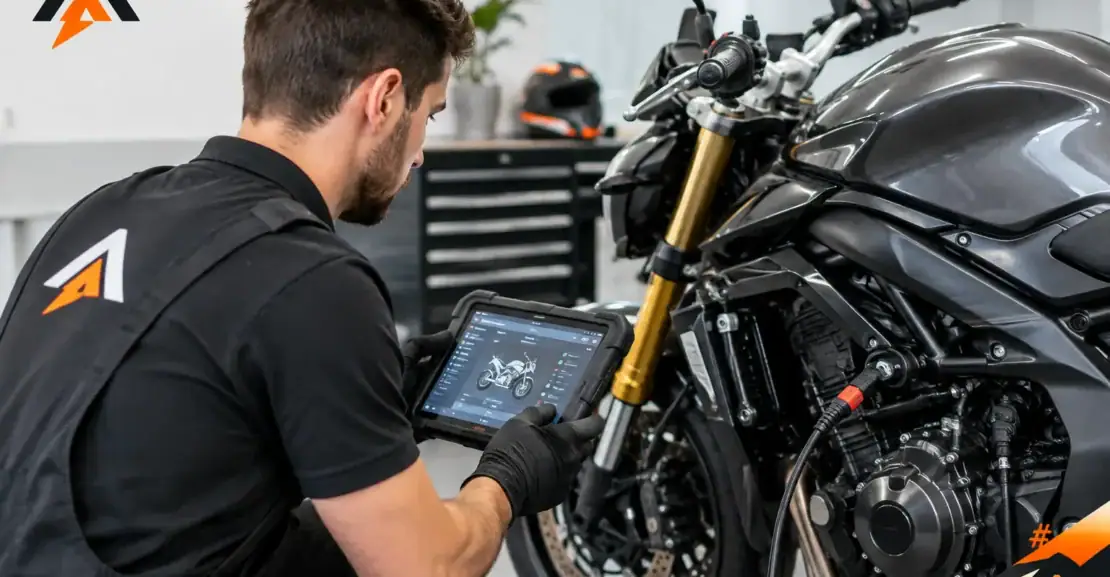
A motorcycle that cranks longer than usual, hesitates out of a corner, or flashes a warning light is asking for attention before it becomes an expensive interruption. Motorcycle diagnostics turn those early signals into useful answers, whether the issue is a sensor, charging system, fuel delivery problem, worn component, or an adjustment that has drifted out of spec.
For riders who value performance, reliability, and the condition of a premium bike, diagnosis should be more than plugging in a scanner and clearing a code. The goal is to understand what the motorcycle is doing, why it is doing it, and what repair will solve the cause rather than temporarily hide the symptom.
What Motorcycle Diagnostics Actually Involve
Modern motorcycles combine sophisticated electronics with mechanical systems that still require experienced hands. A diagnostic appointment begins with the rider’s description of the issue: when it happens, whether the bike is hot or cold, how long it has been occurring, and whether recent maintenance or modifications may be connected.
A technician then verifies the concern whenever possible. This may include a road test, visual inspection, battery and charging-system testing, fault-code retrieval, and live data review through the bike’s diagnostic port. On fuel-injected motorcycles, live data can reveal information from sensors that measure throttle position, intake air, engine temperature, oxygen content, wheel speed, and more.
The electronic side is only one part of the process. A stored code can point to a circuit or system, but it does not automatically identify the failed part. A low-voltage battery, damaged connector, loose ground, contaminated fuel, or aftermarket accessory can create symptoms that look like a sensor failure. Proper motorcycle diagnostics use the code as a starting point, then confirm the root cause through testing.
Diagnostics Are Not the Same as a Basic Inspection
A routine inspection looks for visible wear, fluid condition, tire health, brake-pad life, chain condition, and other maintenance needs. It is essential ownership care, but it may not explain an intermittent misfire or an engine-management warning.
Diagnostics are targeted investigation. The work becomes more involved when the problem appears only at a certain RPM, after the bike reaches operating temperature, or under hard acceleration. That is why a clear description from the rider can save time and make the result more precise.
Signs Your Motorcycle Should Be Diagnosed
A warning light deserves attention, even if the motorcycle seems to run normally. Some faults trigger reduced-power modes only under certain conditions, while others may affect emissions, starting, or long-term engine health before they are obvious from the saddle.
You should also schedule service if the bike has difficult starts, repeated battery drain, stalling at idle, a rough or uneven idle, hesitation during acceleration, unexplained loss of power, overheating, fuel smell, abnormal exhaust smoke, or a sudden decline in fuel economy. Unusual noises matter as well. A ticking sound may be normal valvetrain character on one model and a sign of an adjustment or lubrication issue on another.
Handling symptoms need the same level of attention. Vibration that was not present before, wandering at speed, pulsing through the brake lever, suspension leaks, or a new clunk during braking may not generate an electronic fault code, but they are still diagnostic concerns. On a high-performance sport bike or loaded adventure motorcycle, small changes in behavior are often worth investigating early.
If the bike has a flashing warning light, significant power loss, active overheating, fuel leakage, brake concerns, or an oil-pressure warning, do not treat it as a ride-it-home situation. Stop safely and arrange professional evaluation. The cost of transport is usually far lower than the cost of continuing to operate a motorcycle with a serious engine, fuel, or braking fault.
Why Scan Tools Alone Are Not Enough
A scanner is valuable, especially on newer motorcycles with advanced rider aids, ride modes, traction control, electronic suspension, and multiple control modules. It can retrieve manufacturer-specific faults, display data, perform service resets, and in some cases support calibrations or system tests.
But scan tools have limits. They cannot measure compression, find a cracked vacuum hose at a glance, assess a slipping clutch, or determine whether a charging fault comes from the stator, regulator, battery, wiring, or an accessory pulling current while parked. They also cannot replace an informed road test.
This distinction matters when shopping for a used premium motorcycle. A clean scan is reassuring, but it should be paired with a careful mechanical inspection, cold-start evaluation, charging test, tire and brake review, and a look for signs of accident damage, corrosion, leaks, or poor-quality modifications. The best buying decision is based on the whole bike, not one screen of data.
The Most Common Sources of Diagnostic Problems
Battery and charging issues are among the most common reasons motorcycles behave unpredictably. A marginal battery can cause slow starts, false warning lights, weak cranking, and communication errors between modules. Heat, vibration, short rides, storage periods, and loose terminals all affect battery health, particularly in South Florida’s climate.
Fuel and air issues are another frequent category. Old fuel, clogged injectors, a restricted air filter, vacuum leaks, or throttle-body problems can create rough running and hesitation. On motorcycles with multiple cylinders, synchronization and fueling balance can make a noticeable difference in how smoothly the engine responds.
Electrical faults can be frustrating because they are often intermittent. A wire may make contact until vibration, steering movement, rain, or heat changes the circuit. Skilled testing traces the fault instead of replacing parts by guesswork.
Finally, modifications can change the diagnostic picture. Exhaust systems, intake changes, tuning devices, lighting, alarms, and accessory wiring can improve a bike when installed correctly, but they can also introduce compatibility issues. Be upfront about every modification when bringing the bike in. That information helps a technician separate a genuine component fault from a setup issue.
How to Get More From a Diagnostic Appointment
The most useful information is specific. Rather than saying the bike “runs bad,” explain whether it surges at steady throttle, cuts out after 20 minutes, stalls when downshifting, or struggles only after sitting overnight. Mention the fuel used, recent service, storage history, warning lights, aftermarket parts, and any work performed just before the issue began.
If you can safely capture the symptom, a short video of the dash, sound, smoke, or starting behavior can help. Do not attempt to recreate a dangerous fault on the road. A service team can plan a controlled test instead.
Before your appointment, bring both keys if the model uses coded keys, as well as relevant service records and details about installed accessories. Keep the motorcycle in the condition where the issue occurs. For example, do not disconnect the battery to clear a warning light just before service unless you have been instructed to do so. That can erase evidence a technician needs.
Repair Decisions Should Be Clear and Prioritized
A professional diagnostic process should give you a practical path forward. Some findings require immediate repair for safety or to prevent damage. Others may be maintenance items to address soon, while cosmetic or convenience-related work can be scheduled around your plans and budget.
Ask what test confirmed the diagnosis, what parts and labor are recommended, and whether there are alternatives. There can be trade-offs. An original-equipment component may be the right choice for long-term dependability and resale confidence, while a performance-oriented replacement may make sense for a rider with specific goals. The right answer depends on the motorcycle, how it is used, and the level of finish you expect from the ownership experience.
Protect Performance Before the Problem Grows
Preventive service reduces diagnostic surprises, but it does not eliminate them. Follow the manufacturer maintenance schedule, keep the battery supported during longer storage, inspect tires and fluid levels regularly, and pay attention to changes in how the motorcycle starts, sounds, stops, and responds.
For a premium motorcycle, early diagnosis protects more than the next ride. It protects the machine’s condition, resale appeal, and the confidence that comes from knowing every system is working as intended. Alpha Cycles can help riders move from uncertainty to a clear service plan, so the next time your bike tells you something has changed, you can respond before a small warning becomes a missed weekend.